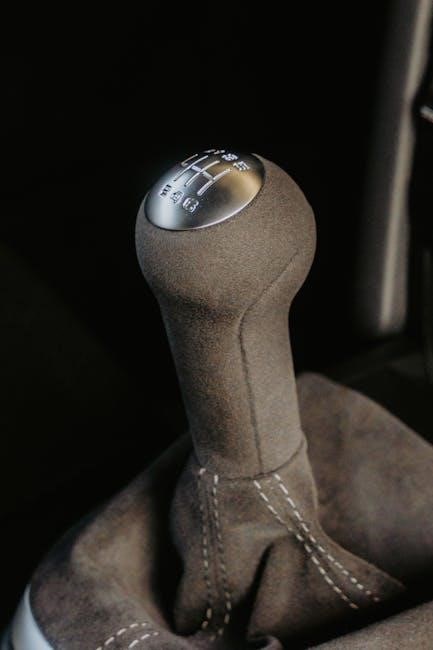
The Chevrolet 350 small-block is a popular engine choice, and selecting the correct manual transmission is vital for optimal performance and enjoyable driving experiences.
Overview of the 350 Small Block Engine
The Chevrolet 350 small-block engine has earned a legendary reputation for its versatility, reliability, and affordability, becoming a cornerstone of American automotive culture for decades. Its simple yet robust design allows for significant power output, making it ideal for a wide range of applications, from classic muscle cars to modern street rods and off-road vehicles.
Originally introduced in 1967, the 350 cubic inch (5.7L) V8 quickly gained popularity due to its balanced performance characteristics and readily available parts. The engine’s inherent strength and adaptability make it a prime candidate for modifications and upgrades, allowing enthusiasts to tailor its power delivery to suit their specific needs.
When pairing a 350 with a manual transmission, understanding the engine’s torque curve is crucial for selecting a gearbox that can effectively harness its power and provide a satisfying driving experience. The 350’s broad torque band makes it compatible with various manual transmission options.
Importance of Manual Transmission Choice
Selecting the right manual transmission for a 350 small-block is paramount to unlocking the engine’s full potential and achieving a truly enjoyable driving experience. A mismatched transmission can lead to wasted horsepower, poor acceleration, and a frustrating lack of control. The transmission serves as the critical link between the engine’s power and the wheels, translating that power into usable motion.
Factors like horsepower, torque, vehicle weight, and intended use all play a significant role in determining the optimal transmission choice. A transmission that’s too weak will be prone to failure, while one that’s too strong may be unnecessarily heavy or expensive.
Careful consideration of these factors ensures peak performance, reliable shifting, and the best overall driveability. Choosing wisely will maximize the benefits of your 350 small-block swap or build.

Common Manual Transmission Options
Several manual transmissions are frequently paired with the 350 small-block, including the T5, T56, NV3500, and the classic Muncie M21/M22 models.
T5 Transmission: A Popular Choice
The T5 transmission stands out as a remarkably popular selection for 350 small-block swaps, largely due to its affordability and relative ease of installation. It’s a commonly found transmission, originally utilized in various Ford and Chevrolet applications, making sourcing parts and information straightforward. However, it’s crucial to acknowledge that the T5 has limitations, particularly regarding higher horsepower and torque levels.
While suitable for moderate builds, owners have reported instances of T5 transmissions failing when subjected to the full force of a heavily modified 350, especially with aggressive clutch engagement. A friend’s unit broke after repeated clutch dumps behind a 502 big block. Despite this, for many street applications and milder performance builds, the T5 provides a cost-effective and reliable manual transmission solution, offering a good balance between performance and budget.
T56 Transmission: Modern Upgrade Path
For those seeking a more robust and capable manual transmission for their 350 small-block, the T56 emerges as the most common upgrade path. This transmission, originally found in modern muscle cars like the Chevrolet Camaro and Pontiac Firebird, boasts significantly higher horsepower and torque handling capabilities compared to the T5. Its six-speed configuration also provides a wider gear ratio spread, enhancing both acceleration and highway cruising.

The T56’s increased strength makes it a suitable choice for builds pushing substantial power, offering greater peace of mind during spirited driving. However, the T56 typically requires more extensive modifications for installation, including a different bellhousing and potentially a custom driveshaft. Despite the added complexity and cost, the T56’s superior durability and performance make it a worthwhile investment for serious enthusiasts.
NV3500 Transmission: Durability and Application
The NV3500 transmission stands out as a durable and readily available option, particularly well-suited for applications where longevity and ease of installation are prioritized. Commonly found in late 1990s and early 2000s Chevrolet S-10s and Blazers equipped with the 4.3L V6, and also in some Chevy 1500 trucks, the NV3500 offers a robust five-speed manual configuration.
Its strength makes it a viable choice behind a 350 small-block, though it’s generally considered to have lower horsepower limits than the T56. Swapping an NV3500 into an S-10 or Blazer with a 350 swap is a relatively straightforward process, often requiring minimal modifications. While it may not be the highest-performing option, the NV3500 provides a reliable and cost-effective solution for many builds, offering good overall value.
Muncie M21/M22: Classic Muscle Car Options
For those aiming for a truly classic muscle car feel, the Muncie M21 and M22 transmissions represent iconic choices when pairing with a 350 small-block. These four-speed manuals were staples in high-performance Chevrolet vehicles during the late 1960s and early 1970s, offering a direct and engaging driving experience. The M21 is a heavy-duty version, while the M22 featured a stronger input shaft, making it more capable of handling higher horsepower.
However, sourcing these transmissions today can be challenging and often requires a rebuild. While incredibly durable for their time, they lack the modern refinements of newer transmissions like the T56. Despite this, their historical significance and robust construction continue to make them desirable options for restoration projects and classic builds seeking authenticity.

Factors to Consider When Choosing
Carefully evaluate horsepower, torque, vehicle weight, and intended use alongside your budget to select the ideal manual transmission for your 350 small-block.
Horsepower and Torque Ratings
Understanding the horsepower and torque capabilities of your 350 small-block is paramount when selecting a manual transmission. Lower-powered builds, perhaps around 300-400 horsepower, can often utilize transmissions like the T5, known for its affordability and decent strength.
However, as power increases – exceeding 400 horsepower, and especially with significant torque – a more robust transmission becomes essential. The T56, NV3500, or even a Muncie M21/M22 are better suited to handle the increased stress.
It’s crucial to remember that even seemingly “wimpy” transmissions, like some T5 variants, can hold up with moderate use, but aggressive driving or high-horsepower applications will quickly expose their limitations. Consider a safety factor; choosing a transmission rated for more power than you currently have allows for future upgrades.
Vehicle Weight and Intended Use
The weight of your vehicle significantly impacts transmission selection. Lighter cars, like a Model A Ford or S10, can often get away with less heavy-duty transmissions than a full-size Chevrolet 1500 pickup. A lighter chassis places less stress on the drivetrain components during acceleration and deceleration.
Furthermore, consider the intended use. A street-driven vehicle will have different requirements than a drag racing or off-road machine. Frequent hard launches and high-stress situations demand a stronger, more durable transmission.
For example, a daily driver might be fine with a well-maintained T5, while a performance-oriented build will benefit from the increased strength of a T56 or NV3500.
Budget Considerations
The cost of a manual transmission swap can vary dramatically, depending on the chosen transmission and necessary supporting modifications. A classic Muncie M21/M22, while offering a vintage feel, may require a rebuild, adding to the overall expense.
Newer transmissions like the T56 are generally more expensive upfront but often require less immediate maintenance. The NV3500 strikes a balance, offering good durability at a reasonable price point.
Don’t forget to factor in the cost of a new clutch, bellhousing, driveshaft modifications, and potentially a new shifter.
Prioritizing needs versus wants is crucial. A budget-conscious build might opt for a used T5, while a high-performance build justifies the investment in a T56.

Compatibility and Installation
Successful swaps demand careful attention to bellhousing fitment, clutch compatibility, and driveshaft length; modifications are frequently necessary for a seamless integration.
Bellhousing Compatibility
Ensuring proper bellhousing compatibility is a foundational step in any 350 small-block manual transmission swap. The 350 Chevy utilizes a common bellhousing pattern, but variations exist depending on the transmission chosen. For older Muncie transmissions, the original bellhousing often works, though inspection for cracks and wear is crucial. Newer transmissions like the T5, T56, and NV3500 may require a specific bellhousing designed for that transmission and the Chevy small-block.
Aftermarket bellhousings offer increased strength and compatibility options, particularly when combining different transmission and engine combinations. Pay close attention to the input shaft bore size, as it must precisely match the transmission’s input shaft diameter. Incorrect sizing can lead to alignment issues and premature bearing failure. Furthermore, consider the bellhousing’s material – steel is generally preferred for its durability, especially with higher horsepower applications. Careful research and selecting the correct bellhousing are paramount for a successful and reliable installation.
Clutch Selection and Matching
Proper clutch selection is critical for transmitting the 350 small-block’s power effectively and reliably. The clutch must be matched to both the engine’s torque output and the transmission’s input shaft spline count and diameter. For mild street applications, a standard street clutch kit is often sufficient. However, higher horsepower builds or those involving aggressive driving demand a performance clutch with increased clamping force.
Consider the clutch disc material – organic, ceramic, or metallic – based on your intended use. Organic clutches offer smooth engagement but limited heat resistance, while ceramic and metallic clutches provide superior grip and durability. The pressure plate’s clamping force must also be adequate to prevent slippage. Don’t forget the throwout bearing; upgrading to a heavy-duty bearing is recommended for longevity. Accurate matching of all clutch components ensures optimal performance and prevents premature wear or failure.
Driveshaft Modifications
When swapping to a new manual transmission with a 350 small-block, driveshaft modifications are frequently necessary to ensure proper fitment and function. The original driveshaft’s length may not be compatible with the new transmission’s output shaft location, requiring shortening or lengthening. It’s crucial to accurately measure the required driveshaft length after the transmission is installed.
Furthermore, the U-joint types and sizes must be compatible with both the transmission’s output shaft and the rear axle’s input yoke. Inspect the U-joints for wear and replace them if necessary. Balancing the driveshaft is essential to minimize vibrations at higher speeds. A professional driveshaft shop can handle these modifications accurately, ensuring a smooth and reliable drivetrain. Ignoring these details can lead to premature wear, vibrations, and potential drivetrain failure.
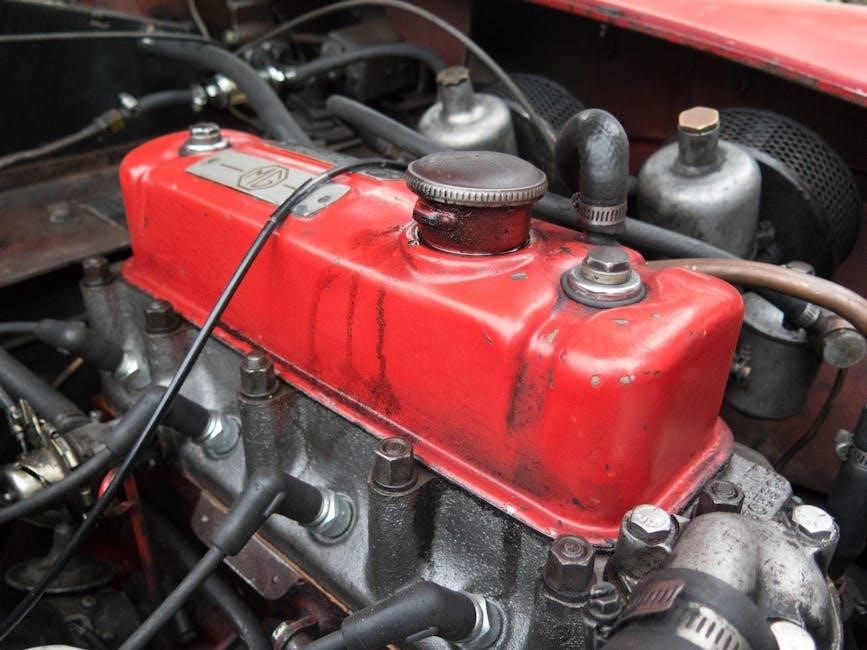
Specific Applications & Swaps
Popular swap projects include S10/Blazer conversions utilizing the NV3500, Model A Ford builds, and installations into Chevrolet 1500 pickup trucks.
S10/Blazer Swaps with NV3500
The NV3500 transmission is a frequently chosen option when performing a 350 small-block swap into an S10 or Blazer. These trucks originally came equipped with the 4.3L V6 paired with the NV3500, making it a relatively straightforward conversion. However, some modifications are typically required. Expect to address bellhousing compatibility, potentially needing an adapter or a bellhousing designed for the 350 and NV3500 combination; Clutch selection is also crucial; matching the clutch to both the engine’s torque output and the transmission’s input shaft is essential for reliable operation.
Driveshaft modifications are almost always necessary due to the potential change in overall length. Careful measurement and potentially shortening or lengthening the driveshaft will ensure proper function and prevent vibrations. Mounting may also require some fabrication or the use of aftermarket brackets to ensure proper alignment and secure attachment. The NV3500 offers a good balance of durability and affordability for these popular swaps.
Model A Ford Swaps
Swapping a 350 small-block into a Model A Ford necessitates a complete transmission overhaul, as the original unsynchronized three-speed manual is wholly inadequate for the power output. Retaining the original transmission is simply not a viable option. Popular choices include the T5, T56, and even the NV3500, each offering varying levels of performance and complexity. Significant modifications are required, including custom transmission mounting and potentially floorboard alterations to accommodate the new transmission’s shifter location.
Bellhousing adaptation is critical, often requiring a custom-made or readily available adapter plate to mate the Chevy engine to the chosen transmission. Driveshaft modifications are also essential, as the length and U-joint angles will change dramatically. Careful planning and fabrication are key to a successful Model A 350 swap, ensuring a reliable and enjoyable driving experience.

Chevrolet 1500 Applications
The NV3500 transmission frequently appeared in Chevrolet 1500 trucks, particularly in later model years, making it a readily available and relatively straightforward swap for a 350 small-block. These trucks often came equipped with the 4.3L V6 paired with the NV3500, providing a strong foundation for a 350 swap. However, compatibility isn’t always guaranteed, and careful consideration of bellhousing patterns and clutch setups is crucial.
When swapping into a 1500, ensure the chosen NV3500’s input shaft is compatible with the 350’s crankshaft. Driveshaft modifications will likely be necessary to accommodate any changes in transmission length. The NV3500 offers a good balance of durability and affordability, making it a popular choice for these applications, though it may have limitations with significantly higher horsepower builds.

Potential Issues and Solutions
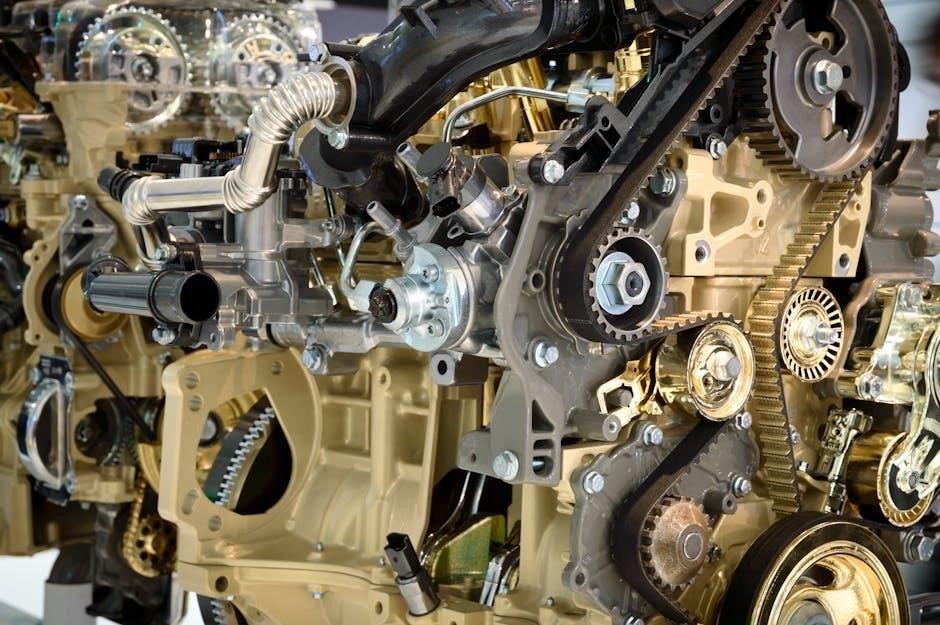
Some transmissions, like the T5, can be weak when abused; clutch dumping can break the case, highlighting the need for component upgrades for reliability.
Transmission Weaknesses and Durability
Understanding the inherent limitations of each transmission is crucial for a successful 350 small-block swap. The T5, while popular for its affordability and ease of installation, is often cited as being relatively weak, particularly when paired with higher horsepower engines. Reports indicate that aggressive use, such as clutch dumping, can lead to case failures, even behind engines like a 502 big block.
Conversely, transmissions like the T56 and NV3500 generally exhibit greater durability. The T56, a modern six-speed, is designed to handle significantly more power, making it a common upgrade path. The NV3500, known for its robust construction, is a solid choice for applications prioritizing longevity and reliability, even in heavier vehicles like the Chevrolet 1500.
Ultimately, durability is directly linked to how the transmission is used and maintained. Regular fluid changes and avoiding excessive stress will extend the lifespan of any manual transmission.
Common Problems and Troubleshooting
Several issues can arise during or after a 350 small-block manual transmission swap. Difficulty shifting is a frequent complaint, often stemming from improper clutch adjustment or a failing master/slave cylinder. Ensure proper pedal free play and bleed the hydraulic system thoroughly. Grinding gears can indicate worn synchronizers, a common issue in older transmissions like the Muncie M21/M22, or incorrect clutch engagement.
Noisy transmissions may point to worn bearings or damaged gears, requiring a rebuild. Leaks are often traced to the rear main seal or transmission input/output shaft seals. Vibrations can signal a misaligned driveshaft or worn U-joints.

Thoroughly inspect all components during installation and address any issues promptly to prevent further damage and ensure a smooth, reliable driving experience.
Upgrading Components for Reliability
To enhance the durability of a 350 small-block manual transmission, several upgrades are recommended, especially for higher horsepower applications. For T5 and T56 transmissions, strengthening the internal components is crucial; consider upgrading to steel shift forks and blocking the speed sensor hole to prevent breakage; A robust clutch is essential – a heavy-duty pressure plate and a performance disc can handle increased torque.
For classic Muncie transmissions, replacing worn synchronizers and installing a modern bearing kit improves reliability. Upgrading the driveshaft to a stronger unit, with upgraded U-joints, minimizes vibration and potential failure.
Finally, a quality short-throw shifter enhances shift feel and precision, while a remote shifter improves cabin comfort. These upgrades ensure long-lasting performance.